








Radiation is a natural occurrence.
Move the Geiger counter and see how much
our surroundings radiate.
There is a special type of radiation
called IONIZING RADIATION or
RADIOACTIVE RADIATION.
Look who is in front
of the house.
The contents of the
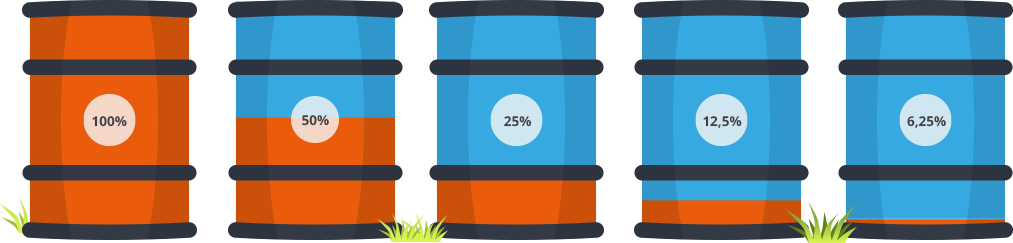
container do not disappear, but their radioactivity diminishes over time.
We can shield from radioactivity
with thick wall or distance.
More about radioactivity can be found
at czrao.hr
Depending on speed of absorption,
radiation dose of 2-10 Sv may cause death.
Geiger counter

The Geiger counter measures radioactive radiation of the object in front of it.       

Some objects that we never would have guessed were radioactive, are. In that, it is important how many natural radioisotopes an object contains. Activity of radioactive objects means the number of spontaneous radioactive decays per unit of time. The Becquerel is the measuring unit of radioactivity, and it represents one radioactive decay per second.
0 Bq - move me -
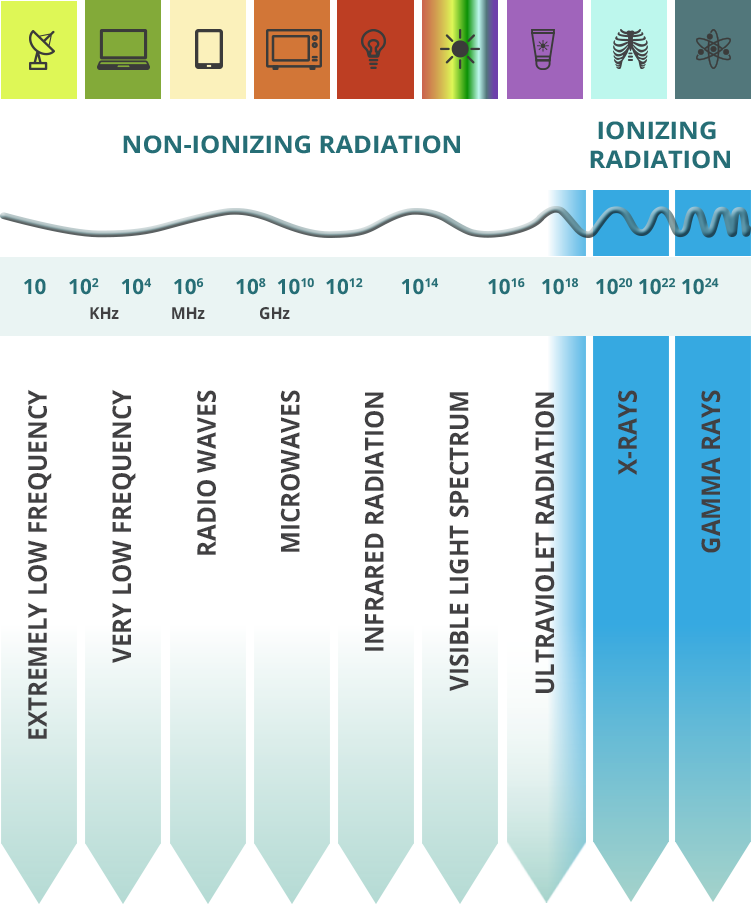
Radiation

Radiation is energy carried through space by electromagnetic waves or particles. We are exposed to a multitude of different radiation in our lives. Different radiation has different wave lengths expressed in meters (m) and different frequency expressed in hertz (Hz).
Radioactive radiation

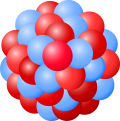
Nuclei of some unstable atoms spontaneously change and decay, and in doing so they emit energy in the form of radiation.

Emission of particles and electromagnetic waves is called ionizing or radioactive radiation, and the atoms from which it originates – radionuclides.
electromagnetic wave
unstable nucleus
particle
Nuclear decay

There are several types of nuclear decay and, accordingly, several types of particles emitted.
paper
aluminium
concrete
Half-life

Half-life of radionuclides is the time in which half the atoms of a particular radioactive nuclide decay.

It is a characteristic property of each radionuclide and is used to define the measuring unit of radioactivity:

1 becquerel = 1 decay / 1 second.
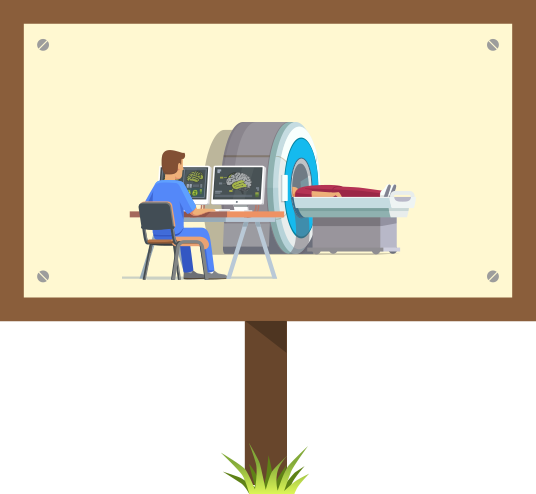
In ionizing radiation cancer treatment the doctor usually
prescribes radiotherapy in grays.
In the beginning
After 'n' time
2 x n time
3 x n time
4 x n time
Gray unit

Gray [Gy] is a unit used to express the amount of energy absorbed through radiation by a matter. Absorbed dose of 1 Gy is equal to the amount of energy, e.g. 1 joule [J] of radiation per 1 kilogram [Kg] of matter.
The equivalent dose of radiation

The equivalent dose of radiation relates to the body absorbing it, and not the source of radiation, and is measured in sieverts [Sv].


Sievert is reached by multiplying the absorbed dose with the effect factor (damage caused) of a specific type of radiation.

The old equivalent dose unit is rem (1 Sv = 100 rem).
5 mSv/year 1 mSv/year 0,07 mSv/year 0,02 mSv/year 0,7 mSv/year 2,2 mSv/year 6,2 mSv/year 1,14 mSv/year 1 mSv/year 1 mSv/year 0,0024 mSv/year 50 mSv/year 1000 mSv/year 2000 - 10000 mSv/year
Dose for an individual inhabitant under special circumstances Additional permitted dose for an individual resident from activities with sources of ionizing radiation Head X-ray Lung X-ray Pelvis X-ray Head computed tomography – CT Pelvis CT Average in Zagreb Average in Croatia Average for a worker at the Krško Nuclear Power Plant In the immediate vicinity of Krško NPP, due to the operation of the power plant Maximum annual dose for workers exposed to radiation Dose that causes radiation sickness Dose that causes death
Comparing the average annual dose

If we compare the average annual dose received by a citizen of Croatia (4 mSv) to the diameter of a soccer ball, and the dose allowed for employees of a nuclear power plant (20 mSv) to the length of a person’s stride, the lethal dose of radiation (3 Sv) can be visualized as the length of a soccer field!


Length of a soccer field
is 100 m.


Person’s stride is 1 m.


Diameter of a soccer ball is 20 cm.